Ana M. Troncoso S.
Hallo! Diese Webseite vereint unterschiedliche Projekte, die ich in Kooperation mit Kolleg*innen aus anderen Universitäten in Deutschland sowie aus Portugal und Spanien, geplant und durchgeführt habe. Gemeinsam ist diesen Projekten, dass sie alle eine postkolonial-kritische Perspektive einnehmen. Ferner war und ist es für diese Projekte wichtig:
- Dass sie ein Dialog zwischen Nachwuchswissenschaftler*innen, Studierenden,
Aktivist*innen und Künstler:innen ermöglichen - Dass sie migrantische Perspektiven einen besonderen Stellenwert für Gesellschaftsanalyse einräumen
- Dass sie für die Analyse auf das Zusammenwirken von Rassismen, neoliberaler Kapitalismus und patriarchale Geschlechterverständnisse sowie Heteronormativität fokussieren
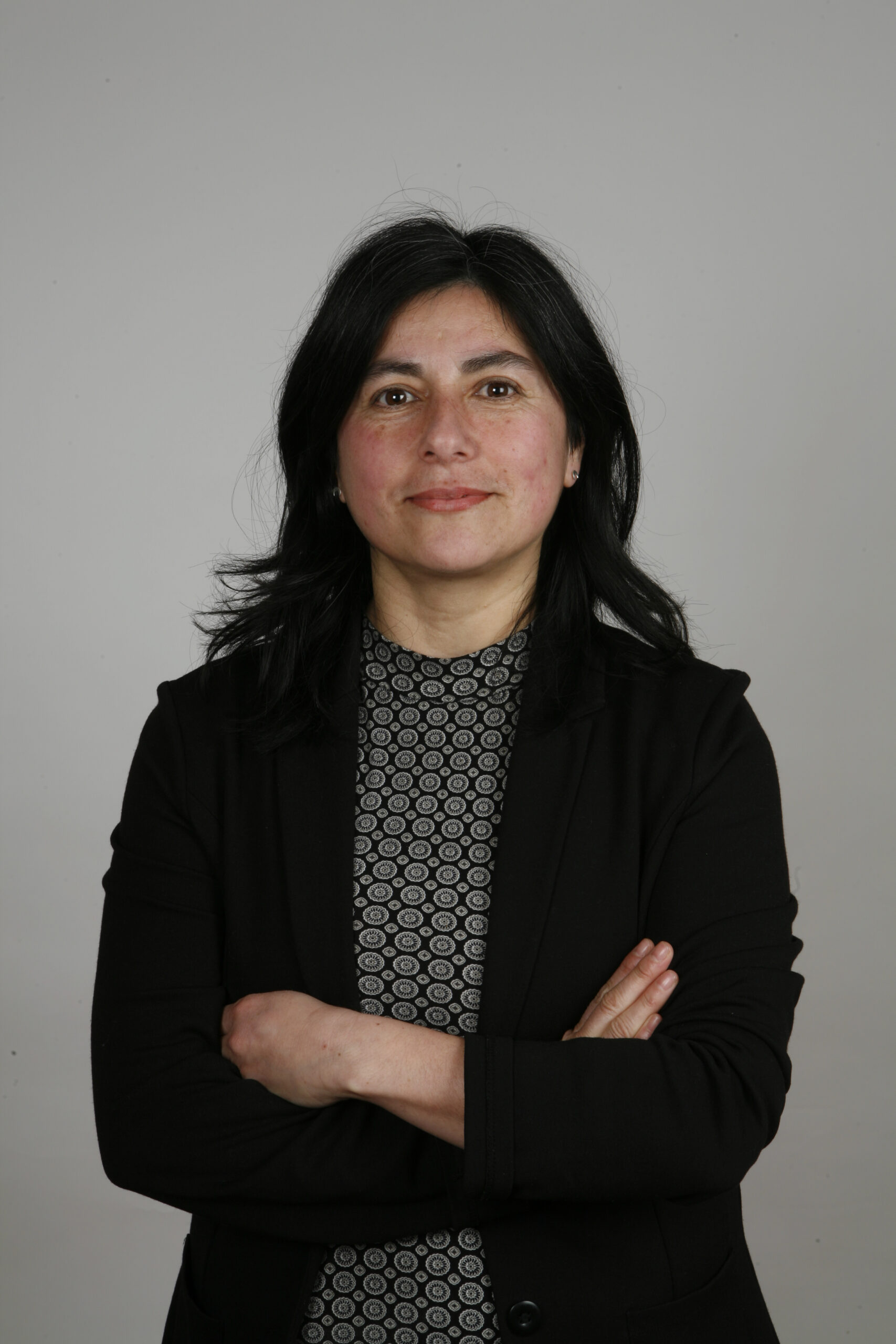
Zu meiner Person
Ich komme aus Chile und lebe seit November 2005 in Deutschland.
In Valdivia, Chile, habe ich Journalismus und Sozialkommunikation studiert (1999–2005).
In Göttingen habe ich einen Master in Kulturanthropologie/Europäische Ethnologie mit dem Schwerpunkt Visuelle Anthropologie absolviert (2009–2012).
Im Jahr 2022 wurde ich im selben Fach promoviert, mit einer Monografie zum Thema Deutsche Jüd*innen in Chile. Prozesse der Bürgerwerdung zwischen historischen Verflechtungen und Rassismen (veröffentlicht als Open Access bei transcript, 2024).
Seit 2017 bin ich als wissenschaftliche Mitarbeiterin am Institut für Europäische Studien und Geschichtswissenschaften der TU Chemnitz tätig.
Mein Bezug zu den Forschungsprojekten
Ich kam im Rahmen eines studentischen Austauschprogramms nach Deutschland. Nach Abschluss des Programms blieb ich hier – zum einen, weil ich eine Familie gegründet habe, zum anderen, weil ich den im Vergleich zu Chile leichteren Zugang zu Hochschulbildung und guter medizinischer Versorgung nicht mehr missen wollte.
In Deutschland „lebe ich, arbeite ich und zahle Steuer“ – wie es der Grünen-Politiker Felix Banaszak gegenüber Kanzler Merz immitten der Stadtbild-Debatte 2025 formulierte, um eine Entschuldigung für dessen Äußerungen einzufordern.
Die Gründe für meine Niederlassung sind persönlich, entsprechen jedoch Lebensumstände, die viele Menschen mit und ohne Migrationsgeschichte teilen. Und obwohl die Faktoren, die zur Entscheidung des Wohnortes beitragen vielen Menschen gemein sind, werden bestimmte Menschen mit Migrationsgeschichte für diese Entscheidung zur Rechenschaft gezogen. Das verweist auf Europa als postkolonialen Kontext und auf Rassismus als einen der zentralen Machtmechanismen innerhalb dieses Kontextes.
Mein Bezug zu den Fragestellungen dieser Forschungsprojekte ist daher zweifach: Diese Verhältnisse betreffen mich auf eine bestimmte Art und Weise. Und als Forscherin möchte ich sie verstehen und ihnen zugleich wissenschaftlich begegnen.
Meine Forschungsbezogene Position ist:
Die postkoloniale Verhältnisse in Europa erschweren die Lebensbedingungen vieler Migrant:innen – zugleich machen sie sie jedoch zu zentralen Akteur*innen im gesellschaftlichen Wandel Europas. Wie dieser Wandel geschieht; wie er von Migrant*innen widerstanden und mitgestalten wird und welche Zukunftvorstellungen von Teilhabe, Repräsentation und gesellschaftlichem Zusammenhalt daraus entstehen, sind zentrale Fragen, denen sich diese Projekte widmen.
Öffentliche Veranstalgungen
Vortrag
„Revolution berichten: Die Nelkenrevolution in der DDR-Presse“
Ana Troncoso, Isabel Fischer, Irena Ilić und Monique Scheuring
Mittwoch, 22.04.26
17:30 – 18:30 Uhr
Ort: Subbotnik – Vettersstraße 34a
Mehr Information auf Instagram
Projekte
Abgeschlossene Projekte
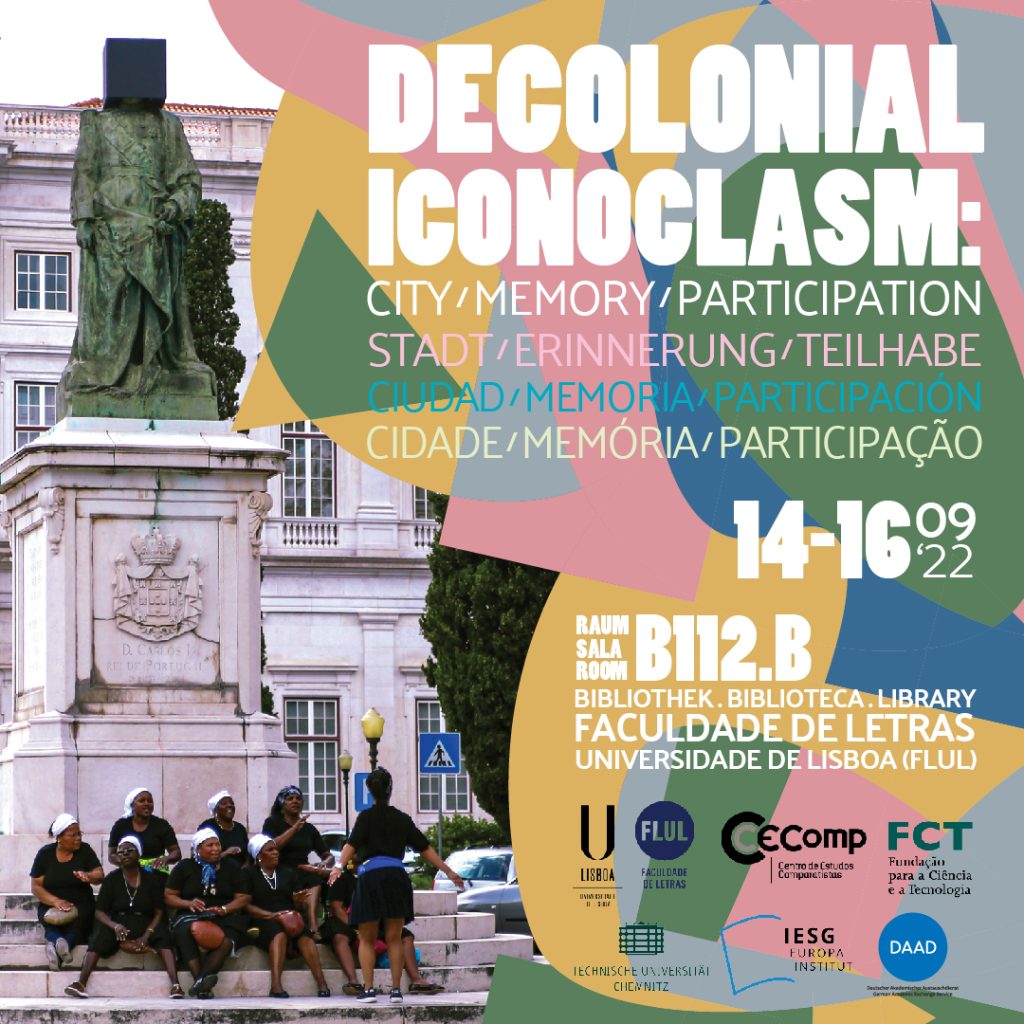
Dekolonialer Ikonoklasmus:
Stadt – Erinnerung – Teilhabe
Eckdaten
Wann: 14.-16.09.2022
Wo: Lissabon, Portugal
Kooperationspartnerin: Dr. Elsa Peralta, Universidade de Lisboa
Finanzierung: DAAD-Programm Hochschuldialog mit Südeuropa
The Postcolonial across Borders: Interdisciplinary Research and Practices of Resistance

Eckdaten
Wann: 25.-28.09.2024
Wo: Chemnitz, Deutschland
Kooperationspartner:innen: Dr. Elsa Peralta, Universidade de Lisboa und Prof. Dr. Doris Wieser, Universidade de Coimbra
Finanzierung: DAAD-Programm Hochschuldialog mit Südeuropa
Projekte in Planung
Migrant Offline/Online Activism in the Context of the Rise of Right-wing Populism and the Far Right in Europe: Postcolonial Critique on the Iberian Peninsula and in Eastern Germany
Eckdaten
When: From April 2027 onward
Where: Portugal, Spain, East Germany
Cooperation partners: NOVA University Lisbon, International University of Catalonia (Barcelona), Chemnitz University of Technology
Brief Description of the Research Project
This project examines how migrant activists on the Iberian Peninsula and in Eastern Germany articulate postcolonial critique and contribute to the (re)imagination of democracy through the interplay of offline and online activist practices. Parties such as Chega in Portugal, Vox in Spain, and AfD in Germany mobilize divisive politics along colonial and racialized identity constructions. Migrants face increasingly precarious conditions while simultaneously challenging these dynamics. Following Foucault’s analysis of power and resistance (1978/79), such developments not only stabilize existing power relations but also enable forms of resistance and the emergence of new subjectivities.
Conducted with two doctoral researchers, the project builds on preliminary studies and existing networks in Portugal and Spain. The central research question is: How do migrant activists in both regions practice postcolonial critique in the context of the Europe-wide rise of the (far) right, and to what extent do their offline and online activities contribute to reimagining social cohesion, participation, and democracy Migrant activist networks are conceptualized as practices of citizenship beyond legal status (Nyers 2010; De Genova 2010). Social media can expand visibility while enabling community to be imagined and practiced differently. Drawing on Daniel Miller (2018), offline and online activism are understood as intertwined spheres. Methodologically, the project combines discourse and content analysis with ethnography and digital anthropology.
These regions differ not only in their colonial histories but also in their contemporary approaches to engaging with that past. Lisbon, as the former center of the Portuguese empire, continues to reproduce narratives of benevolent colonization (Estevens 2023). Barcelona’s ambivalent colonial positioning intersects with contemporary independence discourses and its self-image as a “solidarity city” (Kron 2021). Although Eastern German cities did not play a central role in the colonial project of the German Empire, they bear colonial traces, and engagement with this history varies regionally. Combined with the GDR legacy and intensified far-right mobilization since the 2018 riots, this renders Eastern Germany a space in which memory, representation, and participation are highly contested. The research group enables comprehensive mapping of migrant offline/online activism while addressing multilingual and multi-sited research challenges. Each doctoral project examines at least two cities and two to three activist groups within a general shared timeframe, while specific periods are defined by key local events, following situational analysis (Clarke 2011). Doctoral Project 1 focuses on the Iberian Peninsula, emphasizing postcolonial relations with former colonies and Northern Europe since the economic crisis; analytical axes include self-empowerment, global citizenship, and social cohesion. Doctoral Project 2 investigates Eastern German cities, analyzing activism in relation to the GDR legacy and migration policies since the 2018 riots; key axes are democratization and everyday participation. Complementing these doctoral projects, I will conduct an integrative research project that adopts a zoom-out perspective. It reflects on the group’s theoretical and methodological framework and assesses its analytical applicability for explaining social dynamics and fostering reflexive analysis. Drawing on the collected data, it develops a comparative synthesis of similarities and differences in offline and online activism across the regions.
The Displacement of the South and the Subaltern—Postcolonial Crisis
Imaginaries in Contemporary Iberian Cinema
Eckdaten
When: From October 2026 on
Where: Iberian Peninsula
Brief Description of the Research Project
This project examines Spanish and Portuguese films that address power relations between the Iberian Peninsula and core Europe in the context of the recent economic crisis and the intervention of the “Troika” (ECB, IMF, European Commission). It asks how these films mobilize colonial history and postcolonial critique by localizing global memory and relating it to contemporary debates on inequality shaped by postcolonial and neoliberal power relations.
Although Spain and Portugal have historically been situated within the Global North, the economic crisis saw them discursively recast as an imagined “South.” Media framings such as “Popular Periphery” (Börsen Zeitung) or “Spain Abolishes the Siesta” (Süddeutsche Zeitung) reinforced a We/They distinction and revived culturalist racist stereotypes of the “corrupt, lazy” Southern European (Schneider 2013). Contemporary Spanish and Portuguese films respond to this repositioning from within. I distinguish between films addressing domestic crisis conditions and those foregrounding Iberia’s position vis à-vis Northern Europe. The latter challenge historical identification with the Global North and frame intra-European North–South relations as postcolonial (Villarmea Álvarez 2021).
The project examines how this shift is narrated and visualized in films such as São Jorge (2016), As mil e uma noites (2015), Perdiendo el norte (2015), and El Olivo (2016), which stage austerity, migration, and intra-European North-South relations while reproducing and problematizing images typically attributed to the Global South. These films reveal the overlap of national and colonial histories within contemporary European power relations (Peralta/Jensen 2017). Conceptually, subalternity is understood not as identity but as a relational position within power structures (Spivak 2016). Iberian crisis cinema thus depicts former colonial powers as subaltern actors within the European Union, complicating the equation of South with subalternity and suggesting a “North within the South” and a “South within the North” (Albrecht 2020). Methodologically, the project combines systematic film analysis with approaches from racial capitalism, postcolonial studies, intersectionality, and subaltern studies to analyze how collective memory, cinematic form, and spatial representation mediate global–local power relations.
The project on migrant offline online activism investigates how digital platforms and physical spaces co-produce practices of citizenship, political subjectivities, and alternative imaginaries of democracy. The project on Iberian crisis cinema analyzes how austerity, financial governance, and intra European North–South hierarchies are mediated through cultural production. Taken together, they examine how cultural actors—activists and filmmakers—mobilize historical memory and postcolonial critique to intervene in contemporary debates on inequality, belonging, and power. In doing so, the two projects advance an interdisciplinary cultural theory attentive to digital mediation, value regimes, and the contested constitution of culture.