Whenever you are in old buildings, do you ever find yourself wondering what might have happened within those walls?
This thought also crosses our minds from time to time, especially when we walk through the halls of the ‘Alte Aktienspinnerei’. For the past five and a half years, the building located at Straße der Nationen 33 has housed the University Library, and although we can already recount many amusing and curious stories from this period, these are merely a fraction of the events that the building’s walls have witnessed as silent observers.
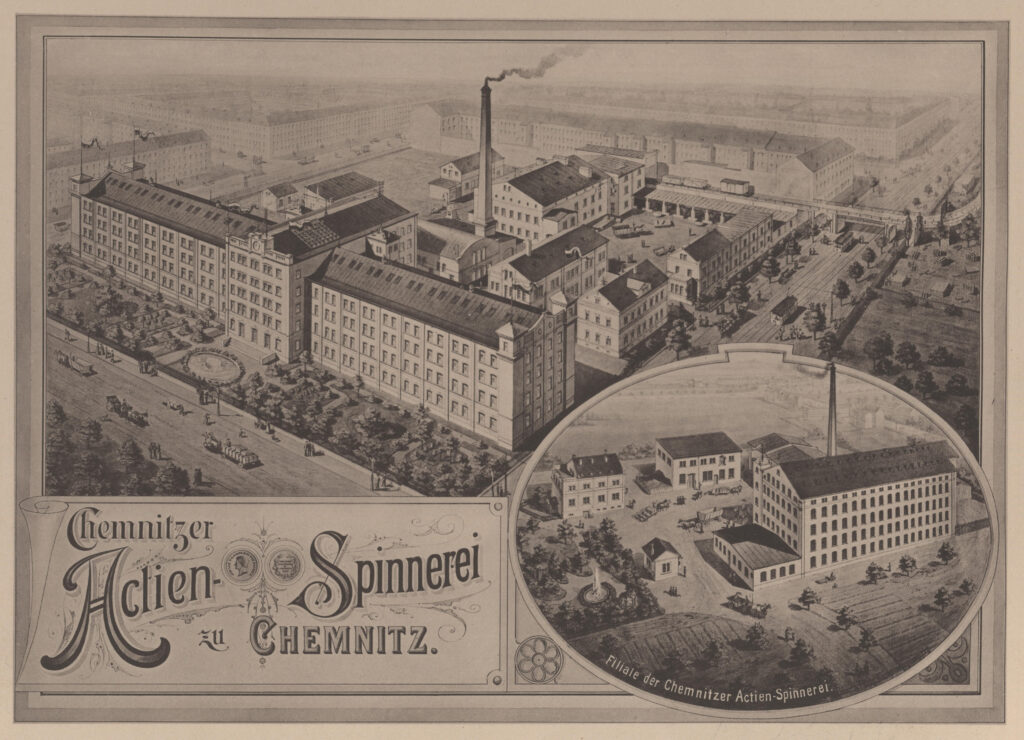
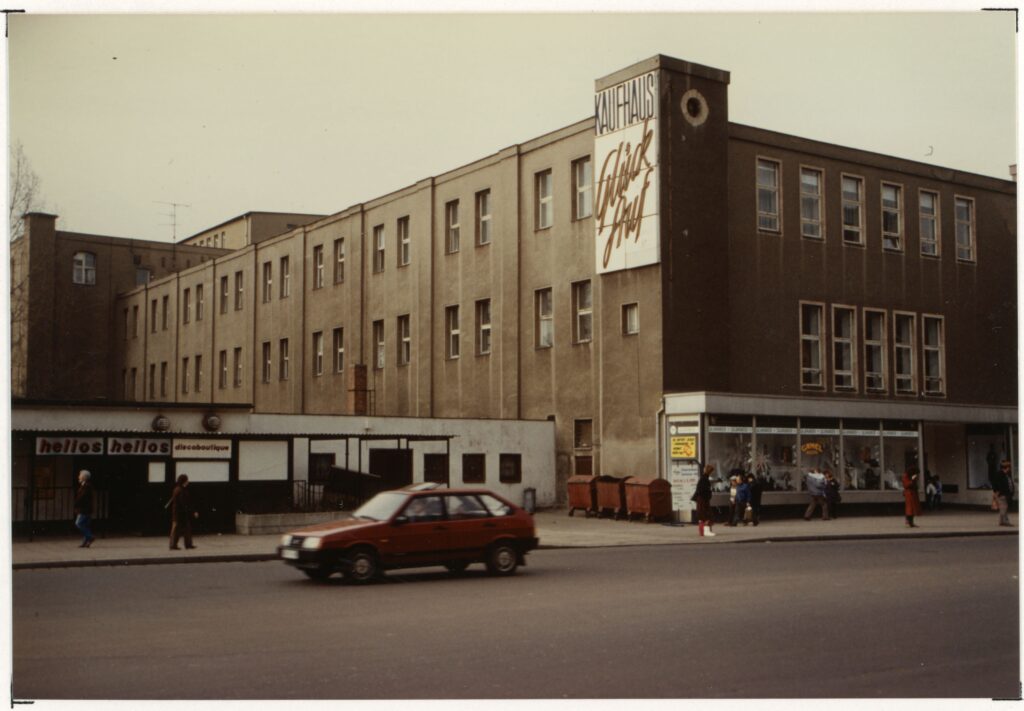
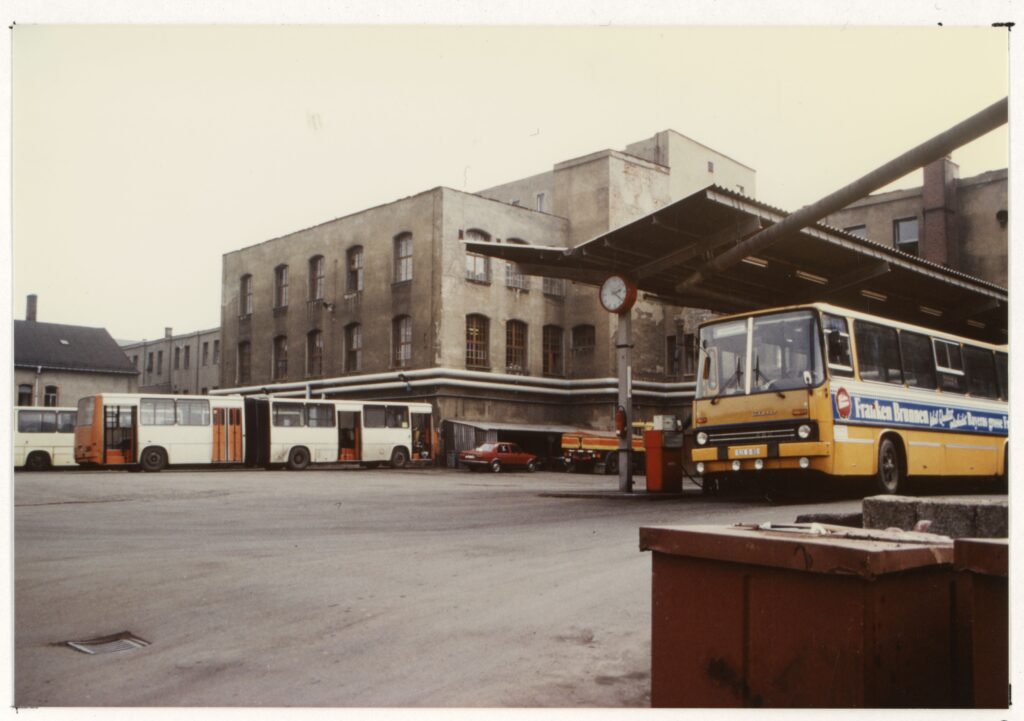
The Aktienspinnerei was established between 1857 and 1859 following the formation of a joint-stock company; it was the largest spinning mill in Saxony at the time, with around 60,000 spindles. However, operations were gradually relocated to Altchemnitz from 1897 onwards, and the area and its buildings were sold to the city of Chemnitz. Between its use as a spinning mill and as a library, the building served many other purposes, for example as a home for the puppet theatre, the vehicle repair shop of the VEB Kraftverkehr Karl-Marx-Stadt, the public library, or the Wismut department store ‘Glück Auf’. Sadly, the walls themselves cannot tell us their experiences, but fortunately there are eyewitnesses who can offer us fascinating insights into times gone by.
In order to bring the stories surrounding the ‘Alte Aktienspinnerei’ to light and preserve them for future generations, the project ‘Fäden der Erinnerung’ (engl. ‘Threads of Memory’) was launched in 2025 under the leadership of the University Library, in cooperation with the Kulturhauptstadt Europas Chemnitz gGmbH and the Chemnitzer Filmwerkstatt. As part of the project, Heidi Hupfer conducted interviews with people who have a very personal connection to the building. Thanks to the diverse range of impressions, various chapters of the building’s history were brought to light: from performances in the puppet theatre, anecdotes from the vehicle inspection hall, reports of unwanted residents in the city library’s card catalogues, adventurous experiences in the daily life of the Wismut department store, right through to historical finds during the conversion into the University Library with its attached University Archive. Thanks to the team at Chemnitzer Filmwerkstatt, these thrilling stories have been turned into a total of eleven videos so far, which you can watch either via our website or directly on our YouTube channel.
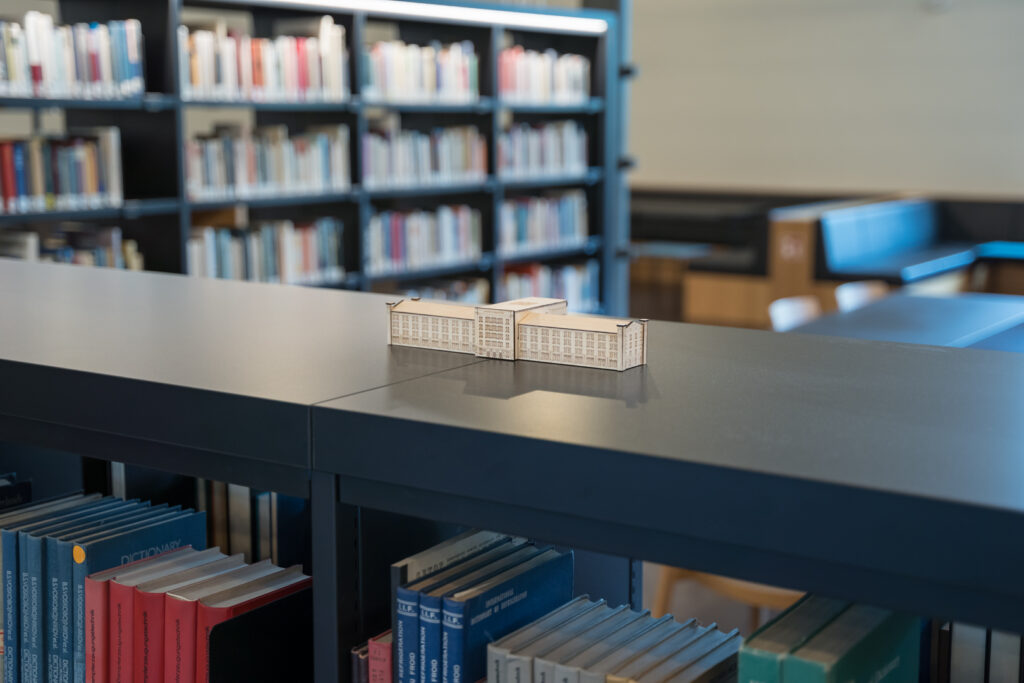
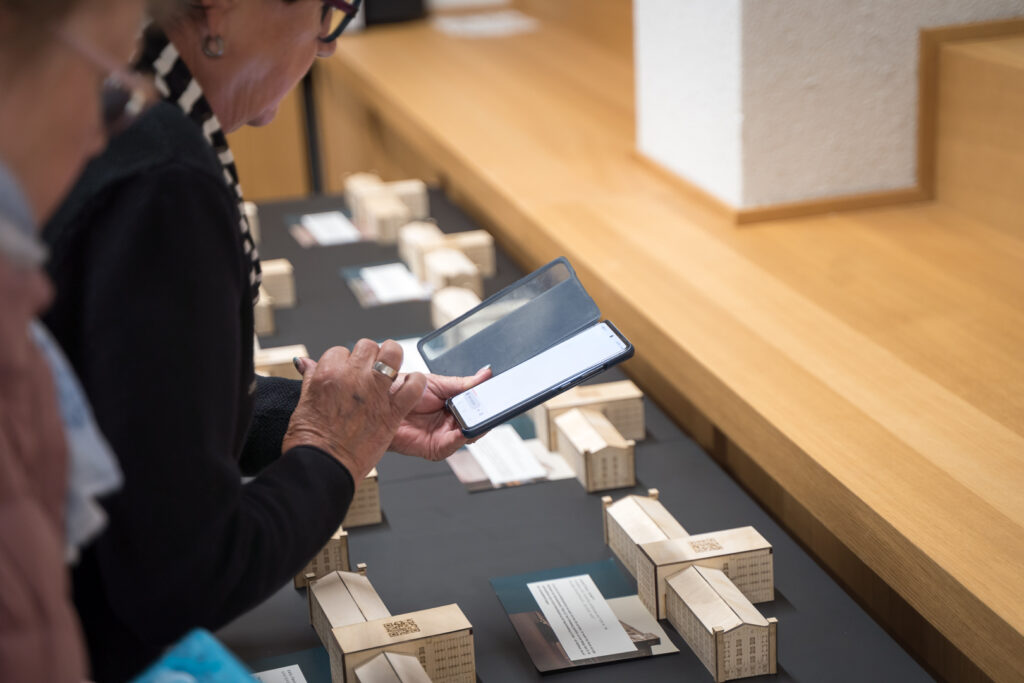
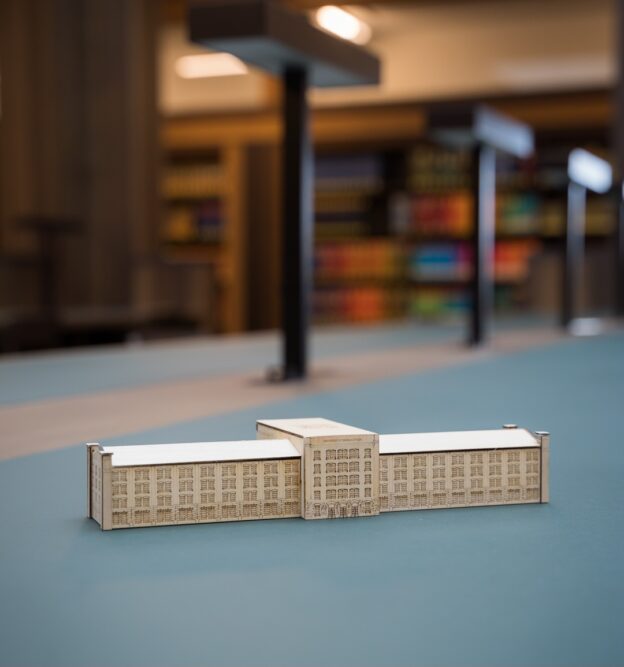
Anyone who has taken a closer look around the University Library over the past few weeks may have spotted some small wooden models of the building on the bookshelves. The models were created by Dipl.-Ing. Karsten Gerlach from the Chair of Assembly and Handling Technology, and each one represents the memories of a person who was interviewed. Each little house has been placed in the building at the spot, where the corresponding facility was located at the time. A QR code is printed on the top of each model, which takes you directly to the matching interview on our website.
We would also like to once again thank everyone involved for their valuable contribution, both in front and behind the camera.
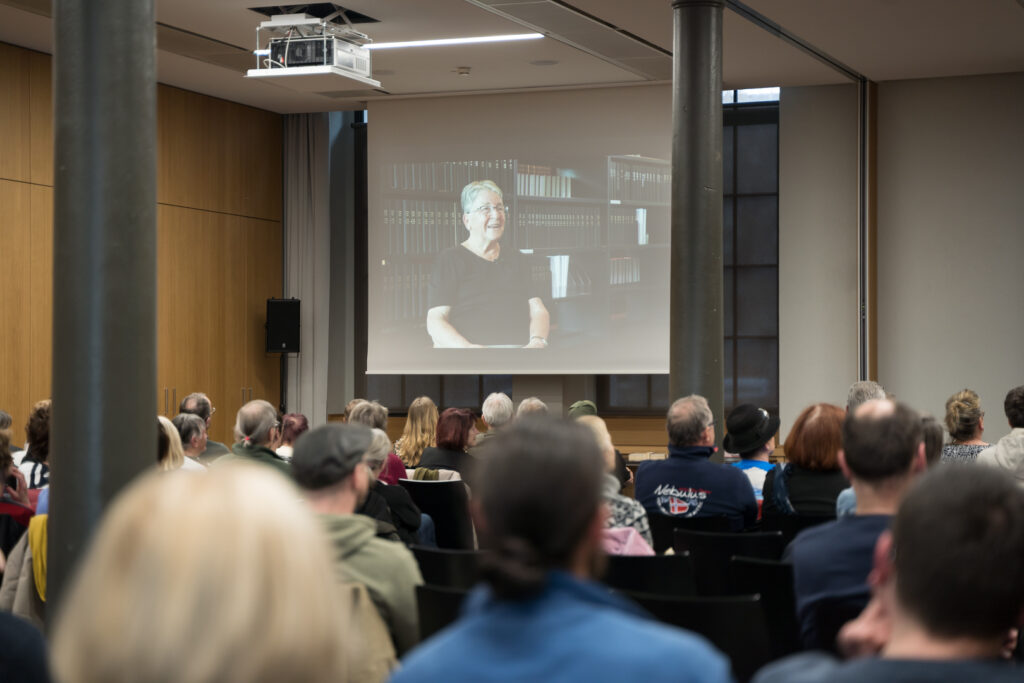
On 30 March 2026, the project team presented the results produced to date in the IdeenReich at the University Library. The event began with a montage of the videos created, giving the audience a little sneak peek of the stories captured on film. Afterwards, there was opportunity to share personal experiences related to the ‘Alte Aktienspinnerei’ in an open discussion. It was truly delightful to hear how many other memories had been mentioned.
One lady recalled a visit with her son to the puppet theatre, where she was captivated by the puppets and the art of puppetry. Apparently, she wasn’t the only adult in the room to feel that way, as the parents seemed to have been more enthusiastic about the performance than the children. But the puppet theatre doesn’t evoke such happy memories for everyone, as during the GDR era it war the gathering point for all men called up for military service before they were marched off to the Reichsbahn at the train station.
The audience also featured librarians from the City Library, who recounted some extraordinary experiences. Among other things, they spoke of the beginning of the digital age, which did not start as planned with working computers, but with a blackout throughout the entire building. When everything was converted for use with technical equipment in the early 1990s, computers were also installed, both for staff and for users. Once all the necessary work had been completed, this milestone was to be celebrated in style. The staff prepared coffee and cakes for all visitors, but when the library opened at 10 am, the whole building was initially pitch black. What nobody had anticipated was that the building’s electrical system was overwhelmed by the sudden surge in demand caused by the computers being switched on and the power consumption of all the coffee machines. Fortunately, the visitors took it all with ease, and so this transition to the digital age remains a vivid memory to this day.
It seemed that other technical devices in the building were not on the staff’s side either, as, for example, the elevator broke down several times. On one occasion, a librarian got stuck in the elevator with a gentleman, who took the situation in good humour. He asked if she had seen the film ‘Abwärts’ (engl. ‘Downwards’), in which the elevator cables slowly snap and the elevator crashes to the ground. After this joking remark, every creak seemed even more alarming to her, and she was truly relieved when she was finally able to leave the elevator after two hours.
The Chemnitzer Volksbühne also joins the list of institutions that were temporarily based in the ‘Alte Aktienspinnerei’. The building housed not only the administrative offices but also several auditoriums capable of seating up to 600 guests. The Städtische Theater Chemnitz used the building as a provisional location for their theatre workspaces. It was the place where the large stage sets were constructed, which could only be transported in an open wagon in fine weather to the opera house, as otherwise the paint would have been washed off.
In the last comment, someone told the story of a lady who, during the Christmas season, managed to secure a set of Christmas tree baubles at the Wismut department store for just 1.60 marks. She was absolutely delighted with her valuable find and carried the box of baubles very carefully all the way home, so that the fragile contents wouldn’t get broken. As the roads were very slippery that day, she kept reminding herself not to slip or fall. But sometimes, when you’re trying so hard to avoid something, it happens anyway, and so she fell onto the pavement. The lady broke a bone in the fall, but it wasn’t a big deal for her because the baubles had survived the accident unscathed. Even today, they still decorate her Christmas tree every year.
It is genuinely fascinating to think of everything the walls of the ‘Alte Aktienspinnerei’ have witnessed – from grand premieres, to small joys and everyday challenges. The project weaves together the individual threads of memory into a comprehensive picture of the building’s history, composed of many different shades and patterns.
Do you have a story you’d like to share? If the camera is a concern, there is no need to worry – your memories are just as meaningful in other formats. If you’d like to tell us your story or have any questions about the project, please feel free to contact our project team at the following email address: spinnerei@bibliothek.tu-chemnitz.de