LOKI

Citing the machine: what citation guidelines say about AI-generated texts

AI tools are transforming scientific literature research. To help you get started with this topic, the University Library offers “LOKI” – an e-learning course on AI-assisted literature research (in German only, an English translation is being planned). This OPAL course has been developed with TUCacademy as part of their microcredential learning offerings.
We plan to highlight a few topics from the course over the next few weeks to present them through various channels. In this blog post, we’ll start with a topic that actually comes at the very end of the literature review process: how do I cite AI-generated text?

Can AI-generated text be cited as an academic source at all?

No, output from generative AI is not suitable as a traditional scientific source of knowledge, as it tends to produce so-called hallucinations (confabulations) and can invent sources or bibliographic references. In student papers, references must always be cited from an original academic source; in exceptional cases, at least from a reliable secondary source. AI-generated text is not actually citable.

Are there, however, situations in academic context where AI-generated text outputs need to be cited?

It is difficult to identify specific cases in which outputs from generative AI must actually be cited in academic work. Whether AI tools may be used at all when writing an academic paper is determined by the guidelines und rules of the respective department, research funding agency, or publisher.

In certain cases, however, outputs from AI tools can serve as primary sources and thus become the subject of scholarly analysis – supported by direct quotations. This necessitates transparent documentation. It might be thinkable that written output from AI tools might need to be cited, for example, in the context of linguistic, information science, or technical works that deal with syntax and lexicology or with the functioning and language models of AI systems themselves.

How should the output be cited in such a case? What do the citation guidelines say?

In recent years, the organizations that publish citation guidelines have updated their guidelines or supplemented them with blog posts.

When citing AI tools, the following elements are generally included across all citation styles: title (for text, image, and multimedia generation tools, this is the prompt; if the prompt is too long, only the beginning of it may be sufficient), name and version of the tool, provider (company/organization that developed the tool), date the content was generated, and address (URL of the tool or the prompt).
Specifically, the following is said in the citation guidelines:

MLA

The MLA guidelines emphasize that the AI tool should not be treated as the author.

If the AI’s final output is not publicly available, the URL of the AI program must be provided. Depending on the departments requirements, a copy of the prompt may need to be attached to the paper. If the output is available via a public URL, this should be listed in the bibliography.

template:example:
bibliography:
„Prompt“, Name of AI, Version (if applicable), Publisher/developer, Date the content was generated, URL of content or URL of AI program.
bibliography, with publicly available URL:
“How many “r” are there in strawberry?“ prompt. Le Chat AI, Mistral Large, Mistral AI, 28 March 2026, https://chat.mistral.ai/chat/31035bcc-c38c-4457-ba8e-16cd5d94c419.
in-text citation:
(“text of prompt”)
in-text citation:
Comparing the fast and the research modes in Le Chat by Mistral AI one can state that the research mode has come up with a correct answer in this case whereas the fast mode’s reply was proved wrong (“How many „r“ are there in strawberry?”).
APA

The additional guidance in the blog post “Citing Generative AI in APA Style” recommends documenting the prompt used in an appendix or footnote.

template:example:
referencing:
AI Company Name. (year, month day). Title of chat in italics [Description, such as Generative AI chat]. Tool Name/Model. URL of the chat
citing AI tool in general:
AI Company Name. (year). Tool Name/Model in Italics and Title Case [Description; e.g., Large language model]. URL of the tool
referencing:
Mistral AI. (2026, March 28). How many “r” are there in strawberry? [Generative AI chat]. LeChat (Mistral Large). https://chat.mistral.ai/chat/31035bcc-c38c-4457-ba8e-16cd5d94c419
citing AI tool in general:
Mistral AI. (2026). LeChat Mistral Large [Large language model]. https://chat.mistral.ai
in-text citation:
Author of AI model (year)
or
(Author of AI model year)
in-text citation:
Mistral AI (2026) responses…
or
(Mistral AI 2026)

Chicago

Section 14.112 of the Chicago Manual of Style recommends using footnotes to identify AI-generated content, so that the full prompt does not need to be included in the text. Multiple prompts from a longer conversation can be summarized.

Since chat conversations are interpreted as personal communication, they are not typically listed in a bibliography or list of references. If an AI conversation is nevertheless included in such a list, it should be cited under the name of the software company and, if possible, contain a publicly available URL. If the content generated by an AI tool is not publicly accessible, it should not to be included in the bibliography.

template:example:
in a footnote:
1. Response to “[prompt text],” AI software, Name of the company/developer, date of search. URL
in a footnote:
1. Response to “„How many “r” are there in strawberry?” Le Chat-Mistral Large, Mistral AI, March 28, 2026. https://chat.mistral.ai/chat/31035bcc-c38c-4457-ba8e-16cd5d94c419
in the bibliography / list of references:
Name of the company/developer. Response to „[prompt text]“ AI program, date of search. URL
in the bibliography / list of references:
Mistral AI. Response to „How many „r“ are there in strawberry?“ Le Chat (Mistral Large), March 28, 2026. https://chat.mistral.ai/chat/31035bcc-c38c-4457-ba8e-16cd5d94c419
Harvard


In the Harvard style (see Cite them right), a distinction must be made between whether the output of the GenAI tool is publicly accessible or not. If the output cannot be made publicly available via a URL, it is treated as a private communication between the author and the tool. You should check with your advisor to see if a copy of your chat needs to be included as an attachment to your paper. 

template:example:
in bibliography/list of references without publicly open URL: Company and Name of AI (Year) Medium of communication to Receiver of communication, Day Month of communcation.in bibliography/list of references without publicly open URL:
Mistral AI (2026) Le Chat response to Jochen Kroll, 28 March.
in bibliography/list of references with publicly open URL:
Name of Tool (Year) AI-generated [medium, e.g. text] by [name LLM] with prompt ‘…’, Day Month. Available at: URL (Accessed: date).
in bibliography/list of references with publicly open URL:
Mistral AI (2026) AI-generated text by Le Chat with prompt ‘How many “r” are there in strawberry’, 20 March. Available at: https://chat.mistral.ai/chat/31035bcc-c38c-4457-ba8e-16cd5d94c419 (Accessed: 28 March 2026).
in-text citation:
Name of Tool (Year)…  …(Name of Tool, Year)
in-text citation:
Mistral AI (2026) carries out…
(Mistral AI, 2026)

IEEE

The IEEE citation style uses footnotes [1], [2], [3], etc., within the text. The complete references are listed in the bibliography. Generative AI is cited as software (see NTU libguide). The text of prompts can be documented in an appendix.

template:example:
bibliography:
Title of Software. (Date). Repository or Archive. (version or year). Publisher Name. Accessed: Date (when applicable). [Type of Medium]. Available: site/path/file
bibliography:
ChatGPT. (GPT-4). OpenAI. Accessed: Sep. 26, 2023. [Online]. Available: https://chat.openai.com/chat

Background information: “LOKI” E-Learning Course

LOKI” E-Learning Course is offered by the Chemnitz University Library in cooperation with TUCacademy. In addition to basic research skills, the e-learning course teaches participants about how selected AI tools work and how to use them. When is it appropriate to use them, and when is it not? In addition, the course covers the documentation and citation of AI-generated text, AI features in academic databases, and risks and challenges such as data protection, copyright, and good academic practice.

The german acronym “LOKI” is intended to highlight the ambivalence of the topic by referring to german youth slang and Norse mythology.

Translation supported by DeepL
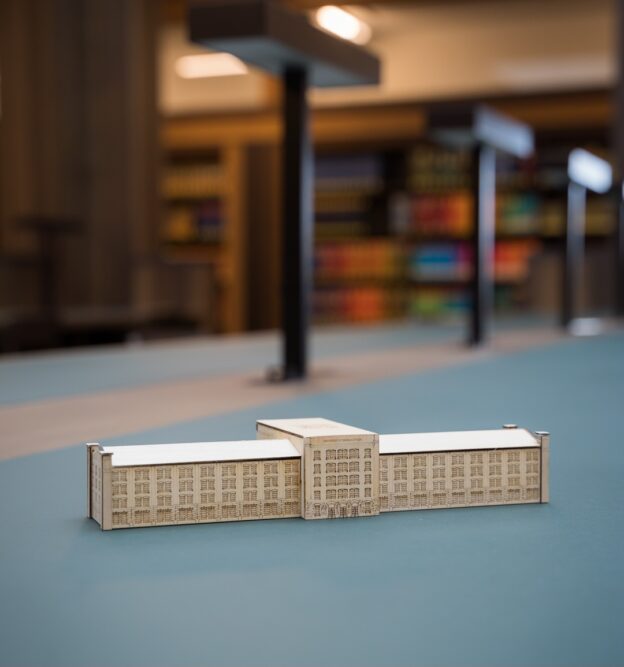
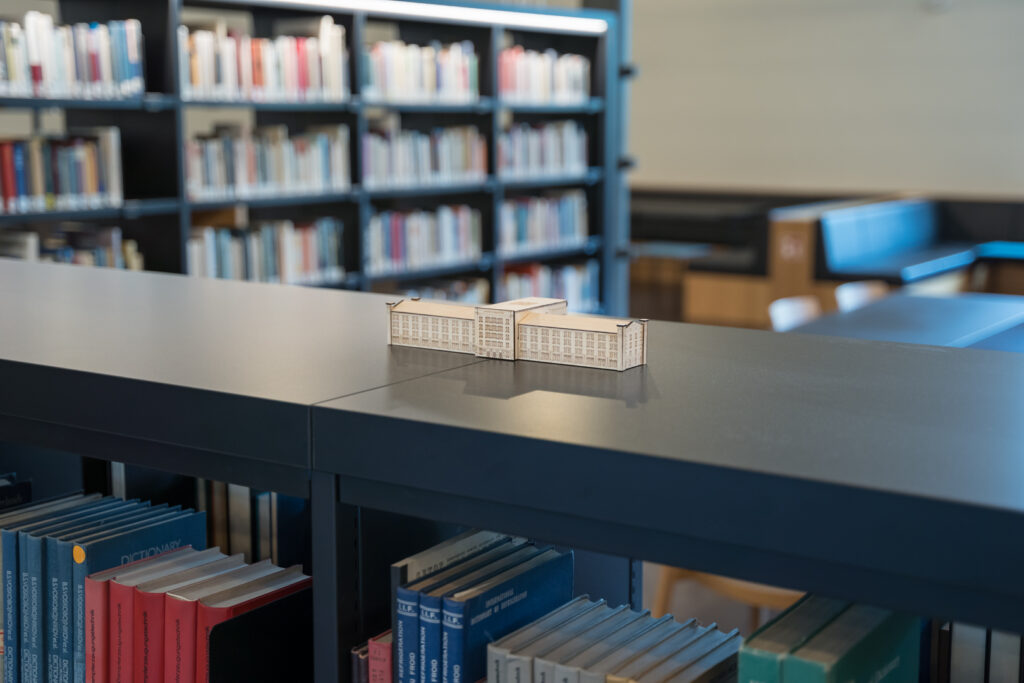
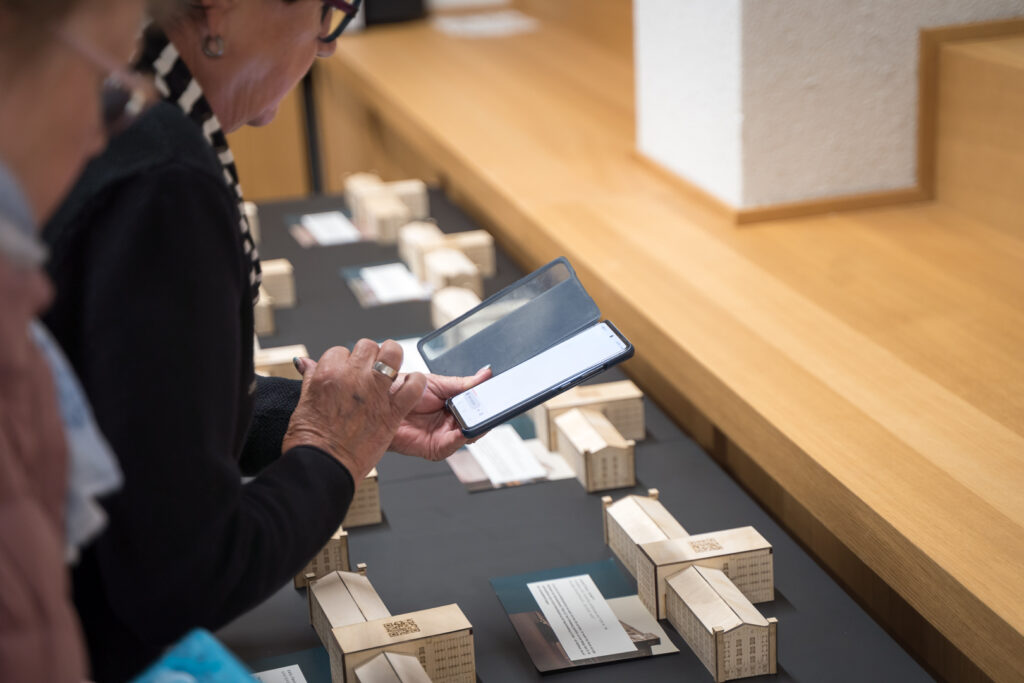
Model of the ‘Alte Aktienspinnerei’ in the Minna Simon Reading Room of the University Library.

Where the “Threads of Memory” are woven together …

Whenever you are in old buildings, do you ever find yourself wondering what might have happened within those walls?

This thought also crosses our minds from time to time, especially when we walk through the halls of the ‘Alte Aktienspinnerei’. For the past five and a half years, the building located at Straße der Nationen 33 has housed the University Library, and although we can already recount many amusing and curious stories from this period, these are merely a fraction of the events that the building’s walls have witnessed as silent observers.

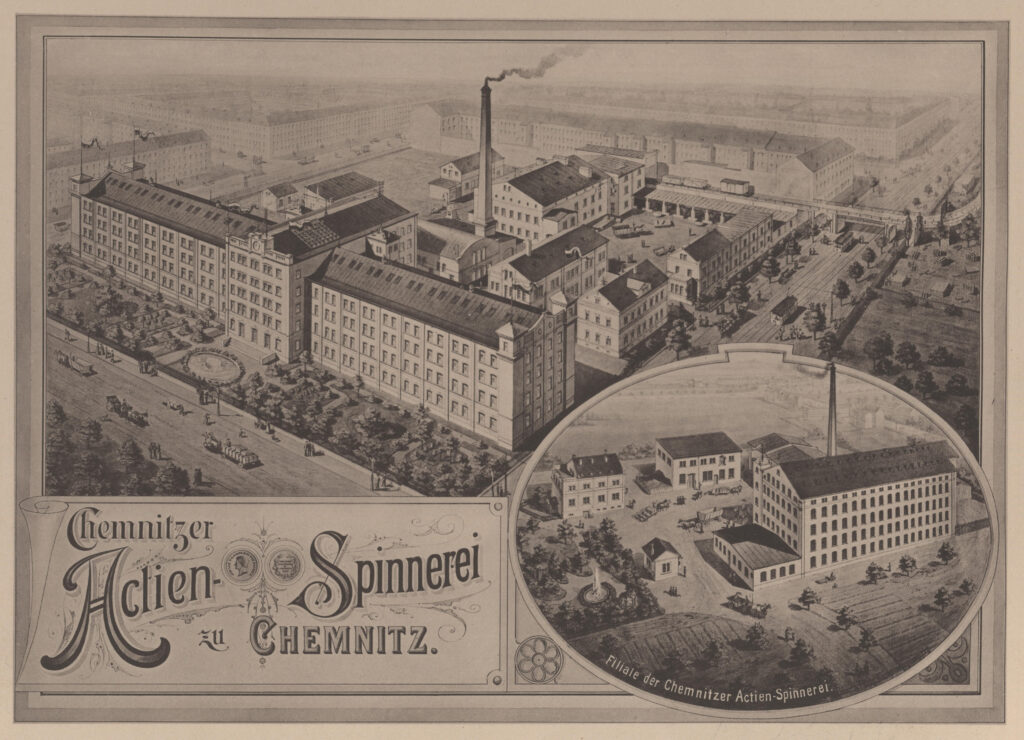
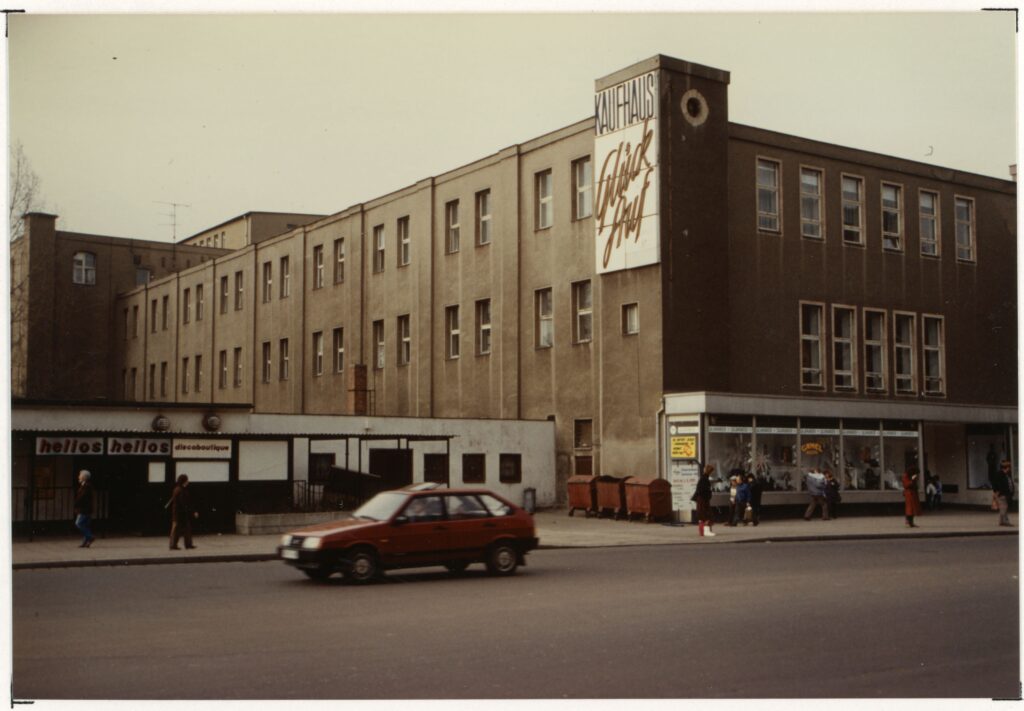
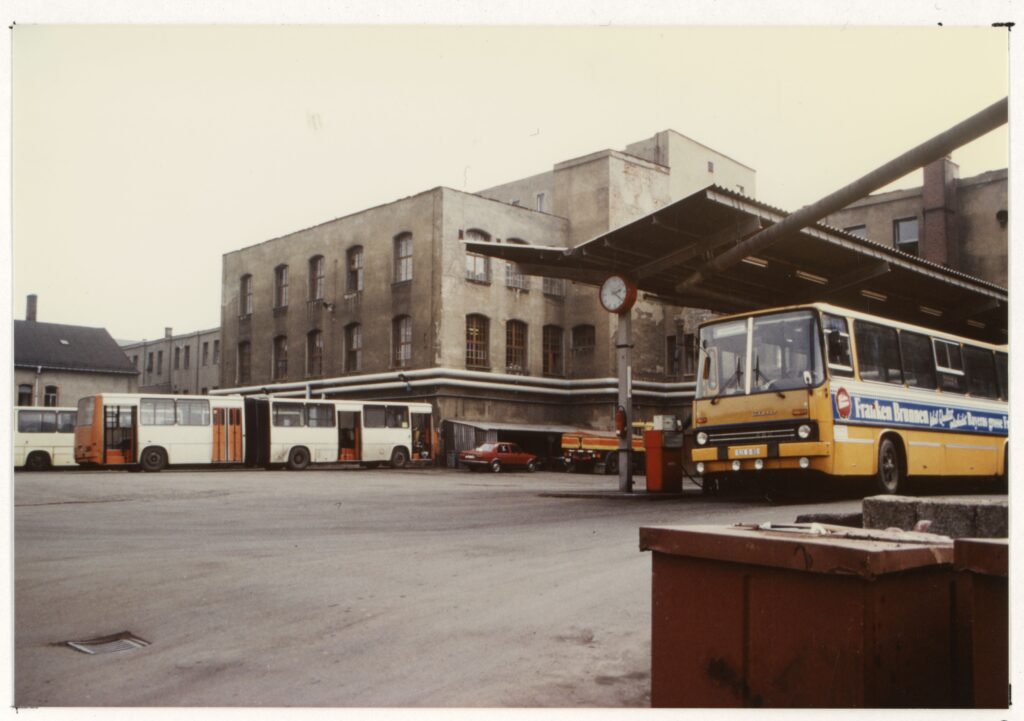
The Aktienspinnerei was established between 1857 and 1859 following the formation of a joint-stock company; it was the largest spinning mill in Saxony at the time, with around 60,000 spindles. However, operations were gradually relocated to Altchemnitz from 1897 onwards, and the area and its buildings were sold to the city of Chemnitz. Between its use as a spinning mill and as a library, the building served many other purposes, for example as a home for the puppet theatre, the vehicle repair shop of the VEB Kraftverkehr Karl-Marx-Stadt, the public library, or the Wismut department store ‘Glück Auf’. Sadly, the walls themselves cannot tell us their experiences, but fortunately there are eyewitnesses who can offer us fascinating insights into times gone by.

In order to bring the stories surrounding the ‘Alte Aktienspinnerei’ to light and preserve them for future generations, the project ‘Fäden der Erinnerung’ (engl. ‘Threads of Memory’) was launched in 2025 under the leadership of the University Library, in cooperation with the Kulturhauptstadt Europas Chemnitz gGmbH and the Chemnitzer Filmwerkstatt. As part of the project, Heidi Hupfer conducted interviews with people who have a very personal connection to the building. Thanks to the diverse range of impressions, various chapters of the building’s history were brought to light: from performances in the puppet theatre, anecdotes from the vehicle inspection hall, reports of unwanted residents in the city library’s card catalogues, adventurous experiences in the daily life of the Wismut department store, right through to historical finds during the conversion into the University Library with its attached University Archive. Thanks to the team at Chemnitzer Filmwerkstatt, these thrilling stories have been turned into a total of eleven videos so far, which you can watch either via our website or directly on our YouTube channel.

Anyone who has taken a closer look around the University Library over the past few weeks may have spotted some small wooden models of the building on the bookshelves. The models were created by Dipl.-Ing. Karsten Gerlach from the Chair of Assembly and Handling Technology, and each one represents the memories of a person who was interviewed. Each little house has been placed in the building at the spot, where the corresponding facility was located at the time. A QR code is printed on the top of each model, which takes you directly to the matching interview on our website.

We would also like to once again thank everyone involved for their valuable contribution, both in front and behind the camera.

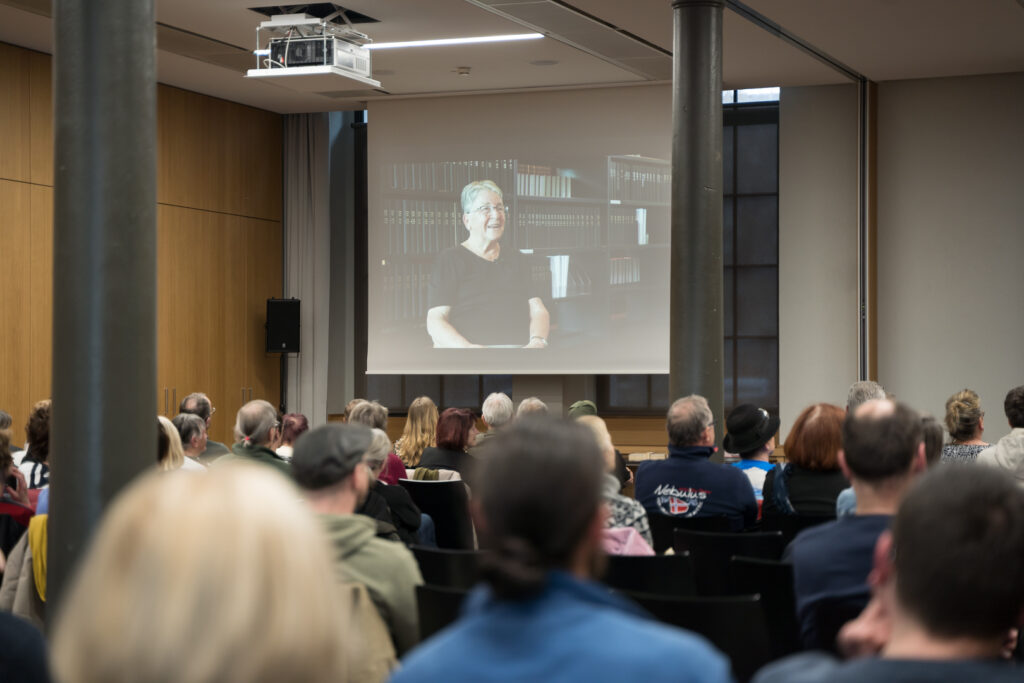
On 30 March 2026, the project team presented the results produced to date in the IdeenReich at the University Library. The event began with a montage of the videos created, giving the audience a little sneak peek of the stories captured on film. Afterwards, there was opportunity to share personal experiences related to the ‘Alte Aktienspinnerei’ in an open discussion. It was truly delightful to hear how many other memories had been mentioned.

One lady recalled a visit with her son to the puppet theatre, where she was captivated by the puppets and the art of puppetry. Apparently, she wasn’t the only adult in the room to feel that way, as the parents seemed to have been more enthusiastic about the performance than the children. But the puppet theatre doesn’t evoke such happy memories for everyone, as during the GDR era it war the gathering point for all men called up for military service before they were marched off to the Reichsbahn at the train station.

The audience also featured librarians from the City Library, who recounted some extraordinary experiences. Among other things, they spoke of the beginning of the digital age, which did not start as planned with working computers, but with a blackout throughout the entire building. When everything was converted for use with technical equipment in the early 1990s, computers were also installed, both for staff and for users. Once all the necessary work had been completed, this milestone was to be celebrated in style. The staff prepared coffee and cakes for all visitors, but when the library opened at 10 am, the whole building was initially pitch black. What nobody had anticipated was that the building’s electrical system was overwhelmed by the sudden surge in demand caused by the computers being switched on and the power consumption of all the coffee machines. Fortunately, the visitors took it all with ease, and so this transition to the digital age remains a vivid memory to this day.

It seemed that other technical devices in the building were not on the staff’s side either, as, for example, the elevator broke down several times. On one occasion, a librarian got stuck in the elevator with a gentleman, who took the situation in good humour. He asked if she had seen the film ‘Abwärts’ (engl. ‘Downwards’), in which the elevator cables slowly snap and the elevator crashes to the ground. After this joking remark, every creak seemed even more alarming to her, and she was truly relieved when she was finally able to leave the elevator after two hours.

The Chemnitzer Volksbühne also joins the list of institutions that were temporarily based in the ‘Alte Aktienspinnerei’. The building housed not only the administrative offices but also several auditoriums capable of seating up to 600 guests. The Städtische Theater Chemnitz used the building as a provisional location for their theatre workspaces. It was the place where the large stage sets were constructed, which could only be transported in an open wagon in fine weather to the opera house, as otherwise the paint would have been washed off.

In the last comment, someone told the story of a lady who, during the Christmas season, managed to secure a set of Christmas tree baubles at the Wismut department store for just 1.60 marks. She was absolutely delighted with her valuable find and carried the box of baubles very carefully all the way home, so that the fragile contents wouldn’t get broken. As the roads were very slippery that day, she kept reminding herself not to slip or fall. But sometimes, when you’re trying so hard to avoid something, it happens anyway, and so she fell onto the pavement. The lady broke a bone in the fall, but it wasn’t a big deal for her because the baubles had survived the accident unscathed. Even today, they still decorate her Christmas tree every year.

It is genuinely fascinating to think of everything the walls of the ‘Alte Aktienspinnerei’ have witnessed – from grand premieres, to small joys and everyday challenges. The project weaves together the individual threads of memory into a comprehensive picture of the building’s history, composed of many different shades and patterns.

Do you have a story you’d like to share? If the camera is a concern, there is no need to worry – your memories are just as meaningful in other formats. If you’d like to tell us your story or have any questions about the project, please feel free to contact our project team at the following email address: spinnerei@bibliothek.tu-chemnitz.de

The badge 2025 goes to – Chemnitz University Library!

Congratulations – Chemnitz University Library is the second German library to receive this coveted award in recognition of its commitment to openness as a principle.

Following the awards in 2016 and 2020, this is the third time it has received this honour, thereby confirming its compliance with the revised openness criteria.

Having met 17 out of 28 criteria and covering all 7 subject areas, the library impressively demonstrates its consistent commitment to openness and transparency. Its performance is particularly strong in the areas of “Participation and Citizen Science”, as well as “Open Access” and “Open Data.” (Open Library Badge 2025). The “Strings of remembrance” project and the “Stadtgeschichten in Bewegung” exhibition were cited as examples of best practice in Citizen Science.

Further points were awarded for the topics “Inclusion and social responsibility”, “Open Source”, “Open Educational Resources”, “Open Government and Open Research Information”. All Open Science topics are also part of the library strategy “The 5D Library: Digital, Dynamic, Durable, Diverse, Discursive – Strategy of Chemnitz University Library until 2030”.

This success is the result of a combination of support from the library management, the strong commitment of the Open Science team, and the cross-departmental involvement of staff.

Collaborations with partners both within the university and externally enhance the prospects for Open Science. This gives rise to networks that sustainably expand areas of activity, integrate new ideas and perspectives, and advance Open Science as a whole, both regionally and beyond.
This process became particularly evident during the University Library’s presentation of the 2025 Open Science Award. There was a surprisingly large number of applications from a wide range of academic career stages, featuring interesting projects spanning the full breadth of our university’s disciplines.


The Open Science Team is also actively involved in the Across Alliance to jointly implement Open Science at member institutions. The first joint organisation of International Open Access Week 2025 was a great success. An ACROSS Open Science Policy is currently being developed.

The team is available to offer advice on any questions regarding Open Science. You can contact us at os@bibliothek.tu-chemnitz.de

The Open Library Badge (OLB) is a quality mark for libraries that champion openness in academia and society. The initiative was founded in 2016 and has been a working group within the German Library Association since 2025.

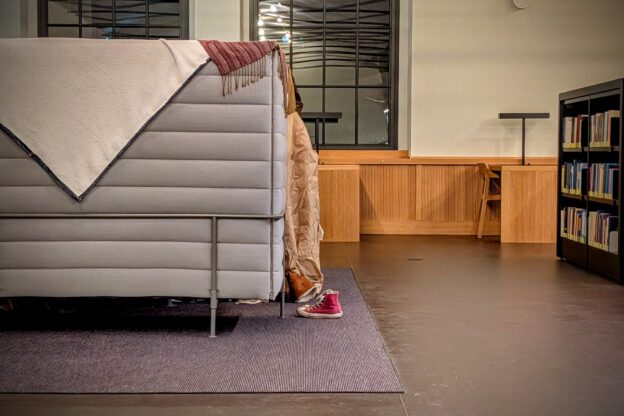
The photo shows a section of the common area at the Chemnitz University Library.

A night in the library – or: exam stress 24/7 with a twist


Although the exam period of the winter semester was likely as packed as ever with written exams, assignments and oral exams, it marked a special premiere for us. In response to repeated requests from our users, we trialled the 24/7 opening of our library from 5 to 13 February 2026, meaning the building was open continuously to members of Chemnitz University of Technology during this period.

Anyone who followed our Instagram channel closely in January was able to take part in our story poll regarding the upcoming 24/7 opening. On average, 38 people shared their views on each question, and although the results weren’t representative, they did give us a brief insight into the general mood. We were delighted to read that you appreciate us as a place to study and that you are able to prepare well for your exams here. When it came to questions about preferred study times, two distinct preferences emerged: studying during the day versus studying at night.

Sixty-two percent of participants cited the morning and afternoon as their preferred time for studying. When asked, “Are you ready for 24/7 opening hours?”, 44 percent of participants stated that they intend to continue studying at the library during the day. In contrast, 38 percent of participants prefer to study at night. For this group, the 24/7 opening hours were apparently of particular interest, as 56 percent of participants were looking forward to it and half of them even planned to visit the library only at night from now on. When asked whether there is currently enough time to study in the library, 64 percent of participants replied that it is not the case for them. As no reasons were given, only assumptions can be made as to the causes. One possible factor could be the library’s opening hours, which have been extended to midnight once again during the exam period. However, from 5 February 2026, everyone should at least have had nine days of sufficient time to prepare for their exams in the library.

The 24/7 opening kick-off was marked by the ‘Long Night of Procrastinated Assignments’, which was attended by around 800 people between 4 pm and midnight. Many students stayed in the building afterwards to spend the following hours ‘at night in the library’. Although we didn’t have any talking exhibition pieces, you still made good use of the time, for example playing games in the common area or for study sessions in your sleeping bags.

However, statistics from our security service indicate that the initial enthusiasm for the extended opening hours quickly waned. Over the following days, there were only around 30 people in the building from 12.30 am onwards, and by 4 am there were only five to ten people left. What has been proven is that the extended opening hours until midnight pay off during the exam period, as an average of 90 people were studying in the library between 10 pm and midnight; the highest attendance was 128 and 118 people.

Overall, only a limited number of users visited the library during the night, meaning that visitor numbers fell short of expectations. The costs associated with security staff and electricity were therefore not justified. For this reason, we do not consider 24/7 opening to be feasible; by contrast, the extended opening hours until midnight have consistently proven to be in high demand.

Although (unfortunately) the saying ‘After the exam period is before the exam period’ applies to most of you, do enjoy the last few days before the start of the summer semester and get some good rest!

From pre-registration via Open Source up to editorship – outstanding engagement in Open Science at Chemnitz University of Technology

In the following of the Open Science Week 2025 and the conferment of the Open Science Award, we look back on an eventful week.

The Open Science Team of the University Library, the project D2C2 and the ACROSS Alliance jointly have designed a varied program. In addition to interesting presentations, there were also offered opportunities to participate in several actions like “Change my mind” and an Open Science quiz.

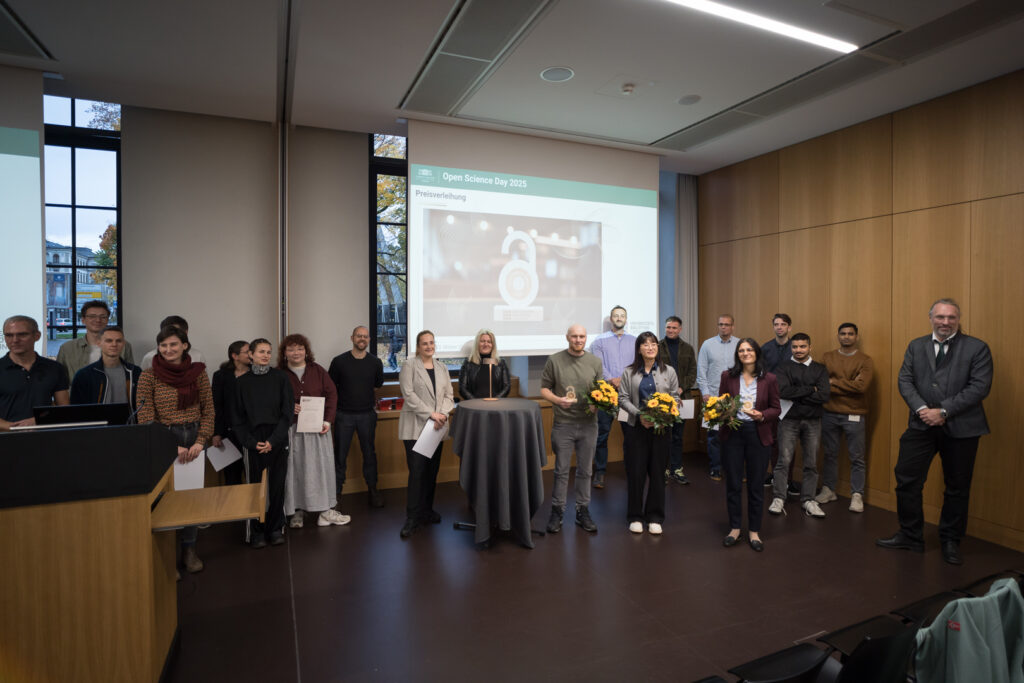
The highlight was the conferment of the Open Science Award (photo). Potential awardees had the opportunities for self-proposal or to be proposed by another person. All nominated persons subsequently submitted an own application.

The number of impressive applications has surprised and amazed us completely.

It appeared almost impossible to only select 3 of them for the award.

However, as not all of them could have been conferred an award, we attach importance to give an overview of all projects in their uniqueness again. The descriptions of the projects were mainly taken from the proposals submitted resp. from the presentations. We assume that the respective contact persons would be delighted to give detailed information.

[The following order does not correspond to an assessment of the contributions]

StochasticDominance is a Julia Open-Source-package for enhanced decision-making in financial options and enables an efficient verification and optimization under stochastic dominance conditions of higher order. By the reduction of infinite conditions to a finite set, the tools makes innovative methods for decision-making accessible and practicable for researchers and practicians. (Rajmadan Lakshmanan & Prof. Dr. Alois Pichler)

The “PartWiss” Guideline for participation in research was collaboratively designed by more than 150 persons involved. It describes crucial aspects in ten action fields. It has for objective to provide practical guidance and orientation regarding the variety of participative approaches and terms. It is designed as a didactically appealing set of cards for modularly use. The respective cards include additional practical information and indications regarding further materials. (Jun.-Prof. Dr. Andreas Bischof)

The science-podcast „Linguistics Behind the Scenes” describes a particular manner for drawing attention on research and to make it step-by-step accessible for the grand public. It has for objective to generate interest for linguistic issues, to inform at the same time by the way about scientific methods and to teach important contents of the research in a comprehensive manner. Via links in the shownotes to Spotify etc., interested persons may read almost all publications used in order to develop their own point of view. A number of articles and book contributions used were published as secondary publications in the repository MONARCH-Qucosa. (Prof. Dr. Christina Sanchez-Stockhammer)

PhD-project “Digitally Created Body Positivity”: Ms. Yeo understands her doctorate in a holistic manner with regard to Open Science and teaches her experiences as scientific staff member to students. In her research project, she frequently faced the challenge of limited access to information. Materials available were not varied enough, were not sufficiently comparable and limitedly replicable. For this reason, she has collected comprehensive data, has elaborated sample stimuli and has stored them on OSF (Open Science Framework). All empirical projects were pre-registered. Assumptions, design and analytical procedures as well as exclusion criteria were openly published. For the materials she has assigned the most open Open Access license CC BY 4.0. Within her entire research process, she exclusively published Open Access. This approach is also for a part mandatorily applied within the supervision of final theses but also comprehensively supported by the students. (Jiyeon Yeo)

BirdNET: It his hardly necessary to explain this project. With more than 2 million active users of the app integrated in more than 80 research projects, it counts among the most popular research projects of Chemnitz University of Technology. The artificial neuronal network is able to distinguish more than 6.000 bird species, provided by a free license and serves as base for a variety of freely-accessible Open-Source-solutions. With this tool, the transdisciplinary and international team contributes significantly to the protection of biodiversity. Unique in comparison to other AI-systems is the transparency and reproducibility. The barrier-free and low-threshold access enables the reception by professional research as well as by biologists, environmental organizations and citizen-science-projects. (Dr. Stefan Kahl)

The research of Ms. Morgenstern is in the field of spin dynamics in organic molecules and she publishes all her results Open Access. She serves as model for the open provision of measuring data, analytic scripts and the complete measurements as well as the corresponding analytic procedure on GitHub. These activities are a role model for Open Science in organic electronics. They enable the complete reproducibility and transdisciplinary reusability in the fields of physics, material sciences and engineering. In addition, she has introduced the electronic lab-book elabFTW in the researchers group in order to assure a standardized and FAIR-complying documentation of data. This approach breaks with the traditionally closed practices in that field and demonstrates how transparency and accessibility may enhance scientific progress. (Annika Morgenstern)

From February to November 2024, the online panel-study regarding the influence of Deepfakes on the reception of democratic processes and polarization was implemented. The questionnaire for the survey as well as the analytic plan was pre-registered on OSF. The ethical evaluation of the project is openly accessible. A manuscript, including replication-scripts, data sets and code-book are currently in review. The data set was made known within the Community and researches get access to the data subsequent to pre-registration of their research issue. The project was initiated solely by junior researchers without third-party-funding. It serves as role model for collaborative, accessible research and active promotion of Open Science in the social sciences. (Klara Marie Steinmetz)

Frontiers in Neurorobotics” is the only Open Access-journal in the field of neurorobotics world-wide. After challenging initial years, it had been established successfully thanks to a high quality of the articles published and has reached an Impact-factor of 2.8, a CiteScore of 6.1 and 25,138 citations in total. Prof. Röhrbein counts among the main editors of this journal and serves as contact person for a variety of editors and reviewers. Thus, the contributes significantly to the global enhancement of research by Open Access and proves that Open Access (Open Science) may be related to highest quality. He already reported his experiences to the ERC-president and the president of the German Rectors’ Conference. (Prof. Dr. Florian Röhrbein)

Since nearly four years, the Professional Learning Community Open Science establishes Open Science (OS) in teaching by an innovative “Students as Partners”-concept. Presentation Packages elaborated as Open Educational Resources (OER) familiarize psychology students with OS-principles from the first day on. Pre-registration workshops create direct relations to practice. In an extracurricular way, the Journal Club and the Instagram-Account focus on the societal relevance of OS-contents and address directly to students, lecturers and researchers. Thanks to the perfect mixture between teaching, peer-learning and science communication, the psychology students are introduced in a targeted manner to transparent science. (Kathrin Fucke)

The Digital Health Application (DiGa) Mawendo is a therapeutic program for training at home. The training programs include exercise videos and are state-of-the-art. A team of the Professorship for Research Methods and Analytic Procedures in Biomechanics has managed to prove that the DiGA is superior in comparison with the standard therapy (physiotherapy). Exclusively in that way, the inclusion in the DiGA-index was possible. The decision was based on the study report of the project published on MONARCH-Qucosa. An English version was published with license CC BY 4.0 in the “Journal of Medical Internet Research”. The successful registration in the DiGA-index enables now the assumption of costs for the therapy by the health insurance for a number of insured persons. (Dr. Tobias Mayer-Roth)

By the publication of a study regarding the research data management (RDM) at German universities in a Diamond-Open-Access-journal, the research project serves as model in the field of economics. The journal “M@n@gement” is the first Open-Access-journal for management, strategy and organizational theory. The publication in this journal sets an example for a consequently open scientific culture. For the first time, the article links the analysis of research data management to a critical perspective on the “neo-liberal university”. Of significant importance is the result that the ways of implementing Open Data practices is determined by the different subject cultures. RDM is characterized by competing institutional logics and designed by tensions between transparency, efficiency and competition ideals. The study opens the forum for new discussions and proves that highest scientific quality, methodical transparency and unrestricted access are compatible and being able to strengthen each other. (Christian M. Huber)

The Meta-Study regarding macroeconomic effects of conventional financial politics (MORPEP META-CMP) is probably the first meta-analysis in the field of macroeconomics which includes a comprehensive public documentation. From the pre-registration of the analytic plan, the AI-driven literature search (10,714 studies), the documentation of the data search and the coding instructions, the version check of all raw data, the intermediate steps of the elaboration of data sets, the data extraction up to the final analysis all information are accessible for the public. The example demonstrates impressively how meta-analyses may be implemented in a transparent and reproducible manner. The experiences are shared beyond the subject area and serve as orientation for the research community. (Dr. Franz Prante/ Prof. Gechert)

The digital, commented and from a historical-critical perspective driven edition of the novel “Ahasver” (1981) of Stefan Heym represents a valuable contribution to the dissemination of this significant literary work. The project provides for the first time comprehensive insights in the state of documentation and includes detailed comments and analyses. The project provides low-threshold and intuitive access opportunities for varied groups of users. The Open Access entry is possible via the three sections textual level, communication level and deliverance level. Target groups are the philologic community as well as all interested readers. (Tobias Frank)

The anthology regarding Chemnitz as Capital of Culture 2025. Sociospatial investigations describes the research contribution of Chemnitz University of Technology to the year of Capital of Culture and transfers scientific results dealing with the theme to the grand public. It includes local civic activities and shows the strong commitment of Chemnitz University of Technology for the city, the region and the event. The communicative manner of Open Science implemented here enables the society to take part in research and to profit from different expertise. In addition, chances for societal dialogue are opened which is particularly in times of growing scepticism towards science of high importance and may enable to strengthen trust in research. The volume was published Open Access via the Digitization Program of the State of Saxony. (Dr. Ulf Bohmann & Jun.-Prof. Dr. Thomas Laux)

Research project regarding the acceptance of second-hand products (as gift). The results discover a societal habitude being opposed to second-hand gifts and explore situations when consumers are nonetheless willing to give second-hand products as a gift. Materials, data, analytic codes and reports of results can be made openly accessible and findable by provision on Open Science Framework (OSF), the assignment of metadata and prospectively DOIs. The OSF-project is designed in a way to make it internationally comprehensible and easily usable. The files are stored in a structured way and named. Analytic codes in the openly available programming language R assure that analyses are interoperable and reproducible. In addition, pre-registrations enable a separation of confirmatory and explorative analyses. (Juliane Weidenhagen)

The project „With LLMs towards informative metadata” addresses the crucial challenge of working with open data. In the best case, those are described in a manner to be findable and reusable for all. Within the project, open language models (Open Source LLMs) are used for generating automatically DCAT-complying metadata. This reduces manual efforts, enhances the quality and consistency and makes open data easier findable for administration, research and civic society. The activity links Open Access, Open Data and Open Source in an ideal way. The approach is very well reproducible and easily transferable on different application scenarios (repositories, OER…). (Björn-Lennart Eger)

For the project „To know, what goes wrong”, funded by the German Research Foundation (DFG), 5 experiments in total were implemented during the last 3 years having for objective to get to know more about the human perception and acting in a transparent and reproducible way. In that way, comprehensive, multimodal and high-definition time series of behavioral data are made accessible on a field where normally exclusively aggregated data are available. At the same time, detailed analytic scripts and descriptions are made available enabling to work with datasets independently, whether in other contexts, with other analysis or modelling approaches or for replication. This is particularly valuable because the measuring data were raised with very precise, specialized high-tech equipment and high personal resources. In addition, the publication of preprints provides a direct access to state-of-the-art research and makes the publication process transparent at the same time. (Dr. Karl Kopiske)

The project BioFab Vending – Sustainable 3D-printing from Organic Waste transforms all-day kitchen waste in biodegradable one-way products, such as cups, plates and spoons. The fully-automatic hardware-system sorts out by means of sensors and image-processing appropriate waste, dries and shreds them, mixes them with biodegradable PLA, pelletizes them and prints the selected article in 3D. The objective consists on enhancing the circular economy, on reducing waste and on promoting sustainable consumer behavior. (Pranav Avinash Khadkotkar & Saswat Pradhan)

Within the ERC-project ACTIONS, a strategy for Open Science was developed and implemented at the Professorship for Electrochemical Sensors and Energy Storage. It includes Gold Open Access-publications, the publishing of corresponding datasets, the elaboration of an ERC-complying data-management-plan and regular trainings. To be highlighted should be the processing of datasets according to the FAIR-principles causing significant additional efforts and not being implemented in that manner on the field of natural sciences that frequently. This holistic Open Science-strategy serves as model for other researchers groups and assures evidence-based scientific work. (Dr. Markus Gößler & Prof. Dr. Karin Leistner)

The Stockholm Declaration: A Call for the Reform of Scientific Publications

The scientific publishing landscape is facing one of the greatest crises of all time. Paywalls block access to publicly funded knowledge, predatory journals flood the literature with unreliable works, and paper mills produce masses of fake studies with AI-generated data, texts, and images. These developments waste taxpayers’ money, distort research results, lead to misleading experiments, and undermine trust in science as a whole.

The Stockholm Declaration, initiated by the Royal Swedish Academy of Sciences and published in the Royal Society Open Science, is an urgent call to action. It demands four core principles:

  • The academy should regain control over publications,
  • Reward quality instead of quantity,
  • Establish independent fraud detection,
  • Implement legal measures to protect integrity.

It is about sustainable, non-profit models like Diamond Open Access, the departure from “Publish or Perish,” and the fight against fake publications.

As a researcher, you can actively participate! Sign the Stockholm Declaration and join the global coalition for trustworthy science.

Visit https://sciii-it.org/stockholm-declaration/ to declare your support – either fully or for individual points.

Links:

https://royalsocietypublishing.org/doi/10.1098/rsos.251805